
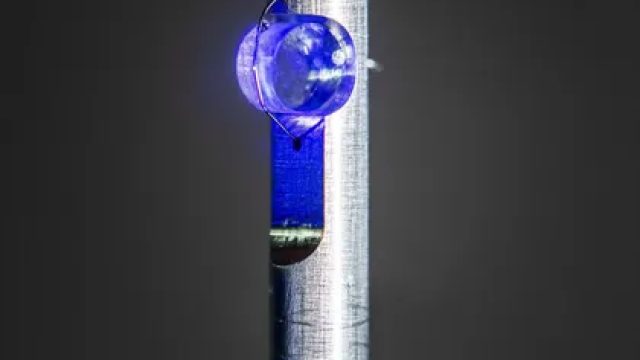
In a remarkable advancement for the field of physics, two independent research teams have unveiled the world's first fully operational nuclear clocks. These sophisticated timekeeping devices, which utilize the properties of radioactive elements, promise to enhance our understanding of time and space, potentially reshaping the landscape of scientific inquiry.
What Are Nuclear Clocks?
Nuclear clocks represent a groundbreaking evolution in precision timekeeping. Unlike traditional atomic clocks that rely on electron transitions, these new clocks harness the nuclear transitions of isotopes, enabling them to achieve unprecedented levels of accuracy. This level of detail allows researchers to measure time with remarkable precision, even observing phenomena previously deemed too elusive to study.
How They Work
The technology behind nuclear clocks involves using highly stable isotopes of certain elements. By monitoring the energy changes occurring in the nucleus when subjected to external influences, scientists can create a time reference that is incredibly stable and reliable. The implications of this innovation extend far beyond mere timekeeping; they open new pathways for exploring fundamental questions in physics.
Implications for Physics and Beyond
The introduction of nuclear clocks could revolutionize our approach to solving some of the greatest mysteries in physics, particularly regarding dark matter. For years, scientists have struggled to understand what constitutes dark matter, which is believed to make up a substantial part of the universe's mass yet remains undetected by conventional means. Nuclear clocks may provide the precision needed to explore interactions at a subatomic level, potentially leading to significant breakthroughs.
Dark Matter Research
- Enhanced sensitivity to interactions with dark matter particles.
- Possibility of detecting extremely weak signals that conventional methods might miss.
- New experimental setups that take advantage of the precision of nuclear clocks.
Potential Applications in Other Fields
While the implications for physics are profound, the applications of nuclear clock technology may extend to other fields as well. For instance, advancements in GPS technology, telecommunications, and even financial systems could benefit from improved timekeeping accuracy.
Technological Advancements
Some possible applications include:
- GPS Accuracy: With more precise timekeeping, global positioning systems could enhance location accuracy.
- Telecommunications: Improved synchronization in networks could lead to more reliable communications.
- Financial Systems: Enhanced time precision could improve the accuracy of transactions and trading algorithms.
Why This Matters Now
The unveiling of nuclear clocks comes at a critical juncture in scientific exploration. As humanity grapples with fundamental questions about the universe, such as the nature of dark matter and the fabric of time itself, the timing of this breakthrough could not be more relevant. As research continues, the potential for new discoveries ignites excitement within the scientific community and beyond.
Furthermore, in an age where data security and information protection are paramount, the integration of nuclear clock technology could also elevate the standards of digital security by enhancing the accuracy of time stamps used in encryption protocols, potentially leading to safer transactions and communications.
Conclusion
The advent of nuclear clocks marks a defining moment in the quest for knowledge, promising to deepen our understanding of both the cosmos and the underlying principles of time. As scientists delve into the implications of this technology, we stand on the brink of potentially transformative discoveries that could reshape our comprehension of the universe. The journey into this new frontier of physics has only just begun, and the world is eager to see where it leads.