
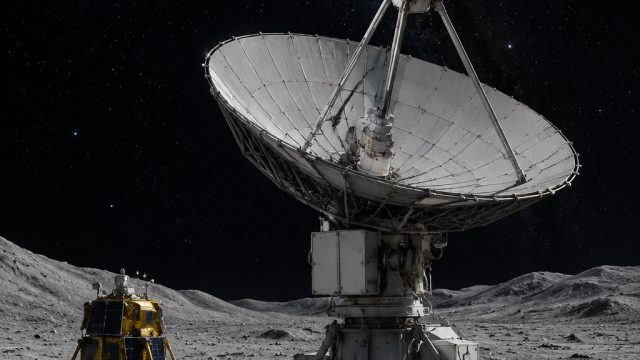
As humanity continues to advance in the realm of space exploration, a pressing question emerges: Why should we consider placing telescopes on the Moon? With recent discussions led by experts highlighting the potential of lunar telescopes, the relevance of this topic is more significant than ever. As we stand at the forefront of a new era in astronomy, the placement of telescopes on our celestial neighbor could unlock unprecedented insights into the universe.
The Moon as a Launchpad for Cosmic Observation
The Moon, with its stable environment and lack of atmosphere, provides a perfect platform for advanced astronomical research. Unlike Earth, where atmospheric distortion can blur our view of distant star systems, the lunar surface offers a clear line of sight into the cosmos. This clarity is essential for capturing high-resolution images and data.
Advantages of Lunar Telescopes
- Reduced Light Pollution: The absence of artificial lights on the Moon minimizes interference, allowing telescopes to observe celestial bodies without obstruction.
- Stable Environment: The Moon's lack of weather disturbances enables continuous observation over long periods.
- Access to Unique Astronomical Phenomena: The Moon’s position allows for unique perspectives on cosmic events, potentially leading to groundbreaking discoveries.
Recent Discussions on Lunar Telescope Initiatives
Experts in the field, including astrophysicists and engineers, have been congregating to discuss the feasibility and implications of deploying telescopes on the Moon. A recent seminar led by Nivedita Mahesh from CU Boulder focused on these initiatives and the scientific opportunities they present. Such discussions underscore the urgency of exploring lunar installations as a means to enhance our understanding of fundamental cosmic processes.
Key Topics Addressed in the Seminar
- Technological Innovations: How advancements in materials and engineering can facilitate the construction of robust observatories on the Moon.
- Collaboration with Private Sector: The role of private companies in supporting lunar telescope initiatives through funding and technology.
- Long-term Research Goals: The potential for lunar telescopes to contribute to various fields, including cosmology, astrophysics, and planetary science.
The Global Race for Space Exploration
The interest in lunar telescopes coincides with a renewed global enthusiasm for space exploration. Countries and private entities are investing heavily in technologies that can support missions to the Moon and beyond. The race to establish a presence on the Moon is not merely about exploration but includes establishing scientific outposts where humanity can learn about the universe.
Competition and Collaboration
As nations mobilize their resources, it is crucial to strike a balance between competition and collaboration. The collaborative efforts of various space agencies can lead to a sharing of knowledge and resources, ultimately enhancing the effectiveness of lunar telescope projects. Joint missions can expedite research and share the costs associated with such ambitious endeavors.
Implications of Lunar Telescopes for the Future
The implications of establishing telescopes on the Moon are vast and far-reaching. Not only could they revolutionize our knowledge of the universe, but they also represent a significant step in preparing for future manned missions to Mars and beyond. By building the necessary infrastructure on the Moon, we can create a launch pad for deeper space exploration.
Future Prospects and Research Directions
- Enhanced Understanding of Dark Matter: By observing distant galaxies, lunar telescopes could aid in deciphering the mysteries surrounding dark matter.
- Studying Exoplanets: The capabilities of lunar telescopes could enhance our search for potentially habitable exoplanets.
- Support for International Space Treaties: Establishing a presence on the Moon could foster discussions on international space governance.
Conclusion: A New Frontier Awaits
The conversations surrounding the placement of telescopes on the Moon are not just far-fetched dreams but a tangible step toward redefining our understanding of the cosmos. As we continue to explore these groundbreaking initiatives, it’s clear that the Moon holds the potential to become a pivotal location for astronomical advancements. The future of lunar exploration, with telescopes playing a central role, promises a wealth of scientific discoveries that can significantly enhance our knowledge of the universe.